
Anti-Corrosion 3003 Aluminum Foil for HVAC
As a manufacturer of rolled aluminum products, we produce anti-corrosion 3003 aluminum foil for HVAC heat-exchange applications requiring stable formability, controlled surface quality, and reliable resistance to moisture-related corrosion. This material is widely used as fin stock for air conditioners, condensers, evaporators, radiators, and commercial refrigeration equipment.
3003 aluminum foil is an aluminum-manganese alloy with higher strength than pure aluminum foil. Its balanced mechanical properties make it suitable for high-speed fin stamping and roll-forming operations. When combined with a hydrophilic, epoxy, or other functional conversion coating, 3003 aluminum foil for HVAC can support improved drainage, reduced water bridging, and enhanced resistance to corrosion in humid operating environments.
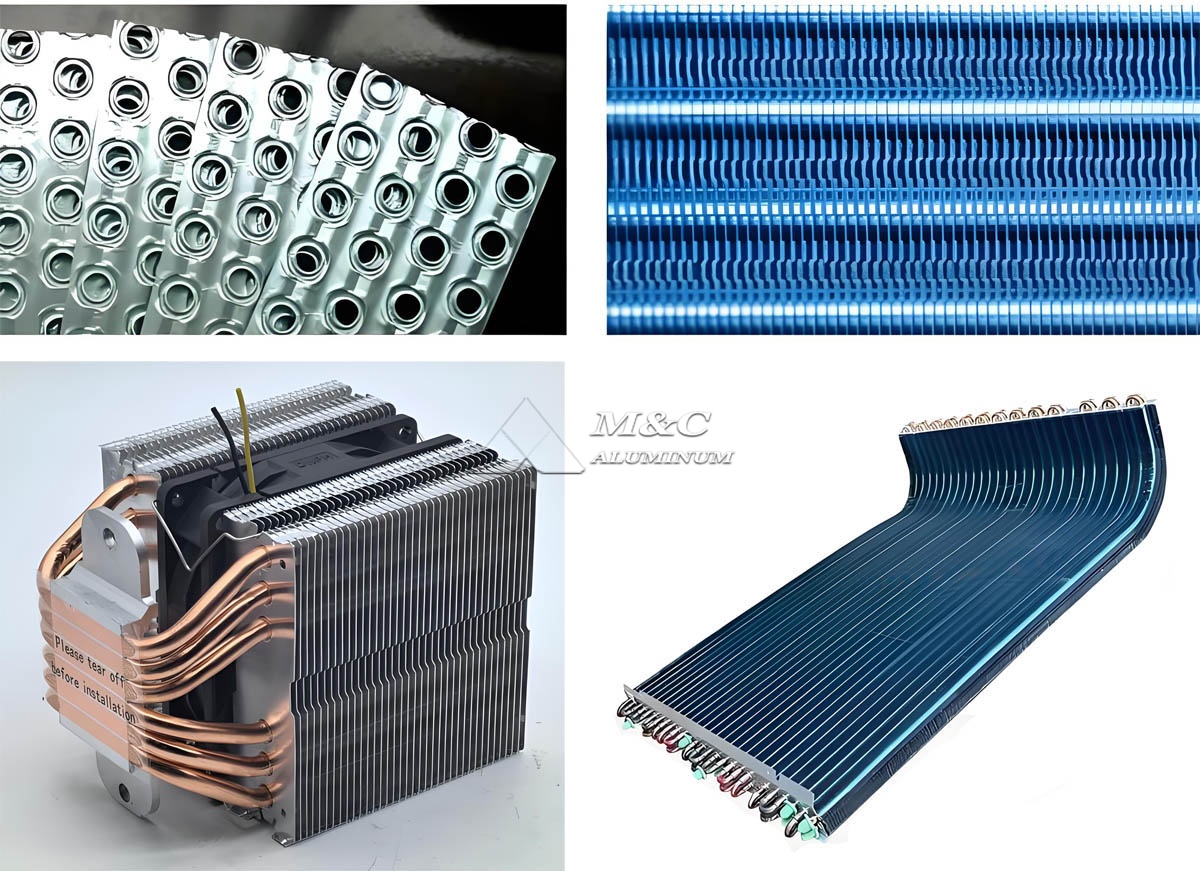
Why 3003 Aluminum Foil Is Used in HVAC Fin Stock
HVAC heat exchangers operate in environments where condensed water, airborne contaminants, salt-containing moisture, and cyclic temperature changes can accelerate material degradation. The aluminum foil used for fins must therefore provide more than a thin, lightweight metal layer. It must retain shape during processing, maintain coating adhesion, and offer a consistent surface for heat-transfer assembly.
Our 3003 aluminum foil contains manganese as its primary alloying element. This improves the strength of the base metal while preserving the ductility needed for precision fin forming. Compared with commercially pure grades, 3003 alloy foil is often selected where equipment manufacturers need better handling strength and reliable dimensional stability.
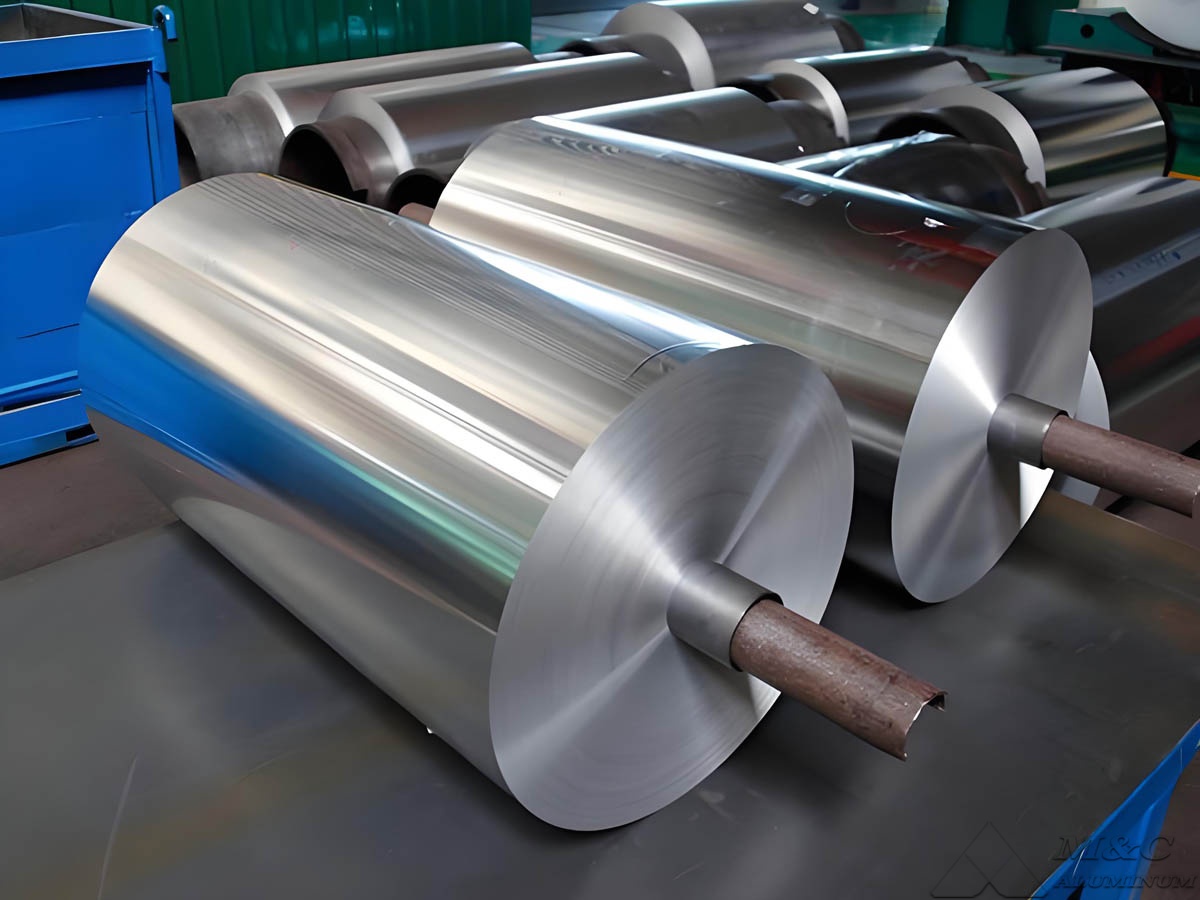
For HVAC fin applications, we manufacture foil with controlled thickness, uniform temper, low edge burr, and clean coil winding. These factors help customers maintain stable press performance and reduce interruptions during fin production. Depending on the final application, the foil can be supplied bare, degreased, pre-treated, or coated with an anti-corrosion surface system.
Our 3003 Aluminum Foil is available for HVAC processors that require custom coil dimensions, temper selection, and surface treatment coordination.
Key Performance Advantages of 3003 Aluminum Foil for HVAC Applications
1. Good Corrosion Resistance: Containing manganese, the 3003 aluminum alloy offers excellent resistance to atmospheric corrosion, making it well-suited for environments involving HVAC heat exchangers.
2. Excellent Thermal Conductivity: Facilitates efficient heat transfer, thereby enhancing the heat exchange efficiency of the unit.
3. Good Formability: Easily accommodates stamping, fin forming, and high-speed processing, making it ideal for mass production.
4. Good Strength and Toughness: Meets the requirements for both the manufacturing and operational use of aluminum fins in air conditioning heat exchangers.
5. Lightweight: Helps reduce the weight of heat exchanger components, simplifying transportation and installation.
6. Broad Applicability: Suitable for use in air conditioning systems, refrigeration equipment, and as aluminum fins for evaporators and condensers.
Anti-Corrosion Surface Treatment Options
The anti-corrosion performance of HVAC aluminum fin stock depends on both the 3003 alloy substrate and the selected surface treatment. We match the coating system to the customer's forming process, end-use environment, and heat exchanger design.
Hydrophilic Coating
Hydrophilic aluminum foil is commonly used for air-conditioner evaporator and condenser fins. The coating improves water spreading and drainage across the fin surface. Instead of forming droplets that may bridge adjacent fins, condensate can flow away more efficiently. This supports air circulation, helps reduce retained moisture, and can limit conditions associated with odor formation and localized corrosion.
Epoxy and Resin-Based Coatings
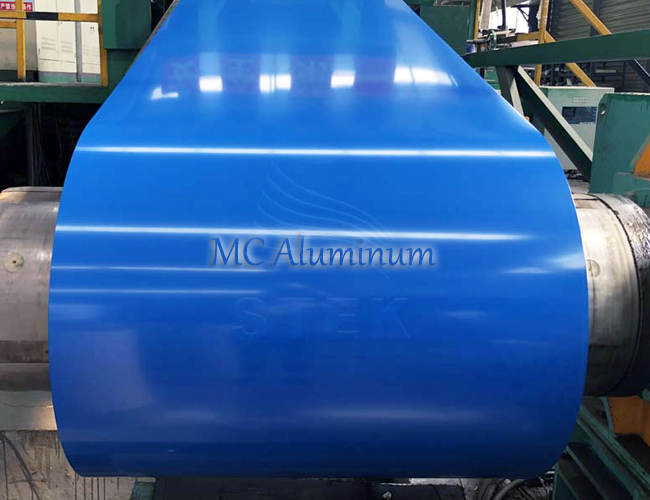
For applications requiring additional environmental protection, we can supply coated 3003 aluminum foil with epoxy or resin-based anti-corrosion layers. These coatings are selected for adhesion, forming compatibility, and resistance to moisture exposure. Coating color can be specified where required for product identification or equipment appearance.
Conversion Treatment and Passivation
Chemical conversion treatments may be applied before coating to improve surface cleanliness and coating bonding. We control pre-treatment conditions to support a continuous surface film and stable downstream processing. Treatment selection should be evaluated against the customer's corrosion test method, refrigerant system design, and local environmental conditions.
Technical Parameters of 3003 Aluminum Foil for HVAC
The following table presents typical manufacturing ranges for our anti-corrosion 3003 aluminum foil. Final values are confirmed according to the purchase order, temper, thickness, coating design, and applicable technical standard.
| Item | Typical Specification | Notes |
|---|---|---|
| Alloy | 3003 | Aluminum-manganese alloy |
| Temper | H14, H16, H18, H22, H24, O | Selected according to fin-forming requirements |
| Thickness | 0.05-0.20 mm | Common HVAC fin-stock range; custom gauges available |
| Width | 100-1,600 mm | Slit width or mill width available |
| Coil inner diameter | 150 mm, 200 mm, 300 mm, 400 mm, 500 mm | Customized to customer equipment |
| Coil outer diameter | Up to customer requirement | Subject to thickness, width, and coil weight |
| Coil weight | 100-5,000 kg | Export coils packed to handling requirements |
| Surface type | Bare, degreased, hydrophilic coated, epoxy coated | Treatment selected by application |
| Coating side | One side or two sides | Available for specific HVAC designs |
| Coating color | Blue, gold, clear, or customized | Subject to coating system availability |
| Tensile strength | Controlled by temper and gauge | Supplied according to agreed specification |
| Elongation | Controlled by temper and gauge | Important for fin stamping performance |
| Surface quality | Clean, flat, low oil, no harmful defects | Inspected before packing |
| Edge condition | Slit edge, controlled burr | Suitable for continuous processing |
Manufacturing Control From Melting to Finished Coil
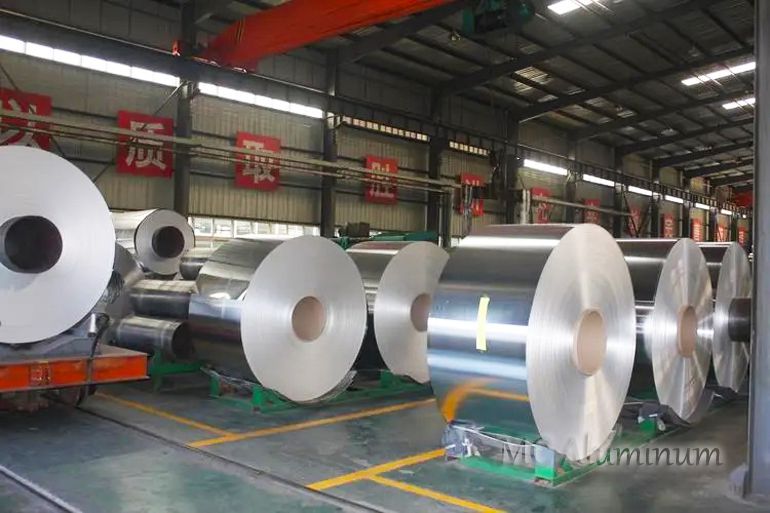
As an aluminum foil manufacturer, we manage the production process from alloy preparation through rolling, slitting, coating, inspection, and export packing. This integrated approach allows us to control the factors that affect HVAC fin performance.
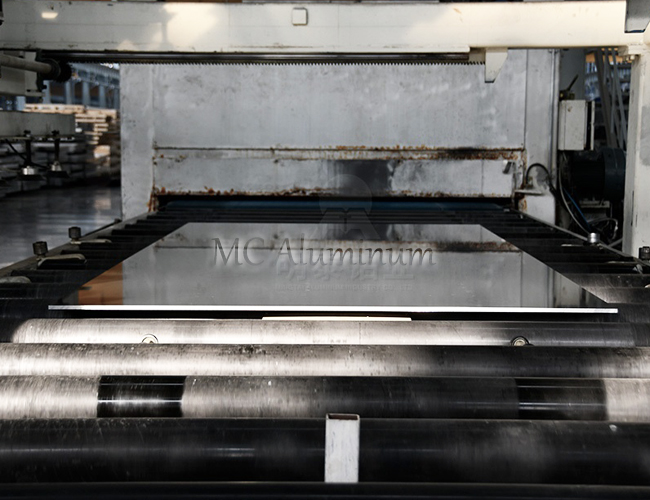
First, alloy composition is controlled during casting to maintain the required manganese content and impurity limits. The cast material is then processed through hot rolling and cold rolling to reach the target gauge. During foil rolling, we monitor thickness profile, flatness, surface cleanliness, and mechanical consistency across the coil width.
Annealing parameters are adjusted according to the requested temper. For example, a harder temper may be appropriate for applications requiring increased stiffness, while a softer temper may be selected where deeper fin forming is necessary. Our production team reviews the end-use process before confirming temper recommendations.
For coated material, coil preparation is particularly important. The aluminum surface is cleaned and treated before coating application. We monitor coating weight, appearance, adhesion, curing condition, and uniformity. Finished material is inspected for pinholes, scratches, coating skips, oil marks, telescoping, and edge defects that could affect automated fin production.
Quality Inspection for HVAC Aluminum Foil
We conduct routine checks throughout production and before shipment. The inspection plan is aligned with the order specification and can include additional testing when required by the customer.
| Inspection Item | Control Purpose |
|---|---|
| Thickness measurement | Confirms gauge consistency across width and coil length |
| Width and edge inspection | Verifies slit accuracy and controlled burr condition |
| Flatness check | Helps prevent feeding and forming problems |
| Tensile and elongation testing | Confirms temper-related mechanical performance |
| Surface cleanliness inspection | Reduces risk of coating or bonding defects |
| Coating weight measurement | Verifies applied coating quantity where specified |
| Coating adhesion test | Confirms coating integrity after forming or bending |
| Corrosion resistance evaluation | Supports compliance with agreed test conditions |
| Coil appearance inspection | Checks winding quality, scratches, dents, and edge damage |
For corrosion resistance, test methods and acceptance criteria should be agreed before production. Salt spray testing, humidity testing, and immersion-related procedures may produce different results depending on coating type, specimen preparation, and test duration. We recommend that buyers specify the required method, test hours, and acceptance standard in the technical agreement.
Typical Applications
Anti-corrosion 3003 aluminum foil is primarily converted into heat-exchanger fins and related lightweight thermal-management components. Typical applications include:
Residential air-conditioner condenser and evaporator fins.
Commercial HVAC heat exchangers.
Refrigeration and cold-chain equipment.
Dehumidifiers and heat-pump systems.
Automotive and industrial cooling components.
Ventilation units operating in humid or mildly corrosive environments.
For customers sourcing complete air-conditioning material solutions, our Aluminium Foil For Air Conditioner range can be specified by alloy, temper, gauge, surface coating, and coil dimensions.
Selecting the Right Specification
Selecting HVAC aluminum foil should begin with the fin design and processing route. The required thickness is affected by fin pitch, tube configuration, stamping tooling, and heat-transfer targets. Temper must be balanced between rigidity and formability. A foil that is too hard may increase the risk of cracking during forming, while an excessively soft foil may not provide the desired structural stability.
Surface treatment should be selected according to the service environment. Hydrophilic coating is generally suitable when improved condensate drainage is the main objective. For installations exposed to salt-laden air, industrial pollutants, or prolonged high humidity, an enhanced anti-corrosion coating system may be required. The compatibility of the coating with brazing, adhesive bonding, and mechanical assembly should also be reviewed.
When submitting an inquiry, we recommend providing alloy, temper, thickness, width, coil inner diameter, coil weight, coating type, coating side, final application, and required inspection standard. This information enables our engineering and production teams to prepare an accurate manufacturing proposal.
Packing and Export Supply
We pack 3003 aluminum foil coils with moisture-resistant protection designed for international transport. Depending on the coil size and shipping method, packing may include protective paper, plastic film, desiccant, reinforced edge protection, wooden pallets, and fumigated wooden cases where required. Each coil can be marked with alloy, temper, dimensions, net weight, batch number, and customer reference information.
Our objective is to supply anti-corrosion 3003 aluminum foil with stable quality from one production batch to the next. By combining controlled alloy processing, precision rolling, functional surface treatment, and documented inspection, we support HVAC manufacturers seeking dependable aluminum fin stock for demanding operating conditions.

Contact Us