
Battery Aluminum Foil for EV Manufacturers
As a manufacturer of precision rolled aluminum products, we supply battery aluminum foil for EV manufacturers producing lithium-ion cells, battery modules, and energy storage systems. Our aluminum foil is engineered for use as a cathode current collector, where consistent thickness, surface quality, conductivity, and mechanical properties directly affect electrode coating performance and battery production efficiency.
EV battery production requires materials that remain stable through high-speed coating, drying, calendering, slitting, and cell assembly. For this reason, our automotive battery foil is produced with controlled rolling schedules, cleanliness management, annealing processes, and final inspection procedures. We manufacture bare aluminum foil and carbon coated aluminum foil in specifications tailored to electrode manufacturers and battery cell plants.
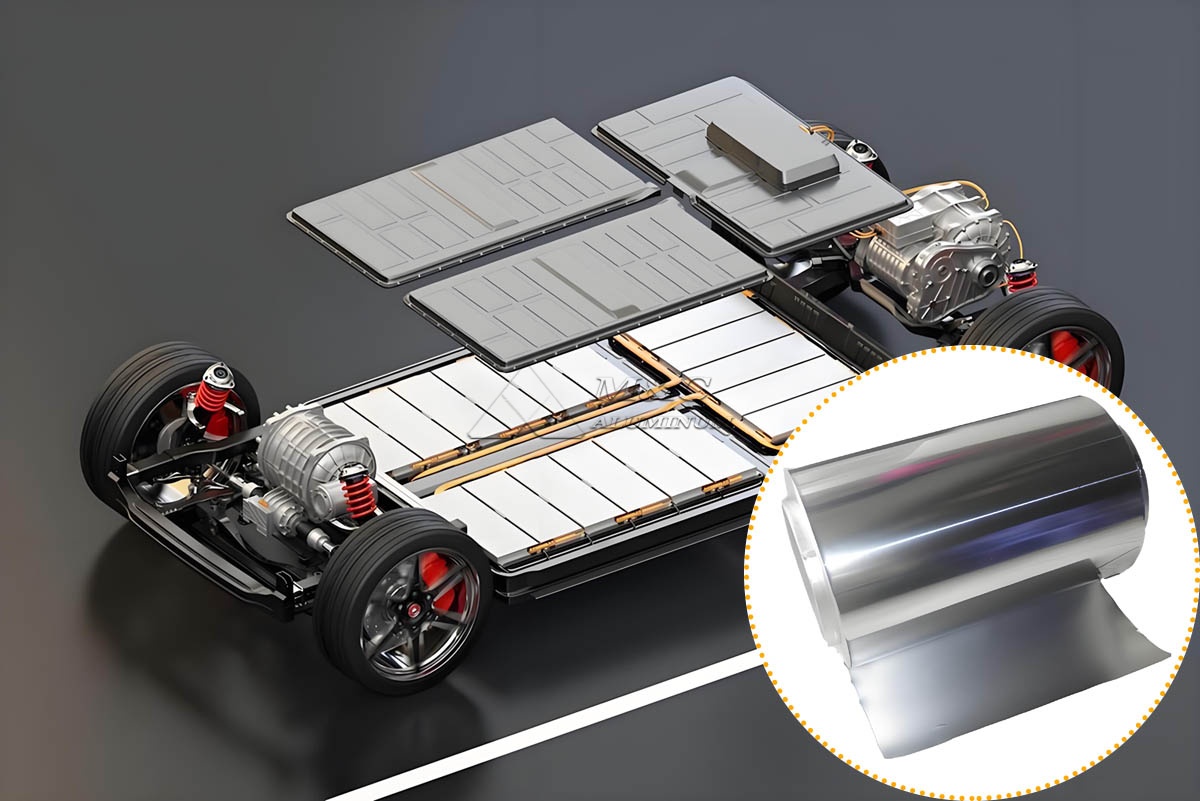
The Role of Aluminum Foil in EV Battery Cells
In lithium-ion batteries, aluminum foil is generally used as the positive electrode current collector. It provides a conductive substrate for cathode active materials such as lithium iron phosphate, nickel manganese cobalt oxide, nickel cobalt aluminum oxide, and manganese-rich cathode formulations.
A reliable aluminum cathode current collector must support uniform slurry coating while maintaining adequate electrical contact with the active layer. It must also tolerate the mechanical stresses of winding or stacking without excessive wrinkling, cracking, edge defects, or dimensional variation.
For EV manufacturers, battery aluminum foil influences several critical production factors:
Electrode coating uniformity and slurry adhesion.
Electrical conductivity across the cathode sheet.
Stability during calendering and high-speed slitting.
Winding quality for cylindrical and prismatic cells.
Flatness and registration control for stacked pouch cells.
Internal resistance consistency and cell-to-cell manufacturing stability.
Our production process is designed around these practical requirements. We work directly with battery material producers and EV supply-chain manufacturers to define the required alloy, temper, thickness tolerance, width, surface condition, and coil geometry.
Aluminum Alloys for Battery Aluminum Foil
The 1xxx series, particularly 1050, 1060, 1070, 1100, 1145, and 1235 aluminum alloys, is widely used for lithium ion battery foil. These alloys provide high aluminum purity, good electrical conductivity, excellent formability, and compatibility with cathode coating processes.
Alloy selection depends on the target cell design, electrode thickness, coating system, and process conditions. Higher-purity aluminum is often selected where conductivity and surface consistency are primary requirements. Certain applications may also require specific strength levels or controlled elongation to support faster converting processes.
Typical Technical Parameters
| Item | Typical Range or Option | Application Consideration |
|---|---|---|
| Alloy | 1050, 1060, 1070, 1100, 1145, 1235 | Selected based on conductivity, formability, and customer process needs |
| Temper | O, H14, H18, H19 | O temper is common for high-formability requirements; harder tempers may suit specific processes |
| Thickness | 0.010 mm to 0.030 mm | Common EV battery foil thicknesses include 12 um, 15 um, 16 um, 18 um, and 20 um |
| Width | 100 mm to 1,700 mm | Slit widths and jumbo coil widths can be supplied according to equipment requirements |
| Thickness tolerance | Subject to agreed specification | Controlled for coating uniformity and electrode consistency |
| Surface | Mill finish, degreased, treated, carbon coated | Determined by slurry adhesion and electrode process requirements |
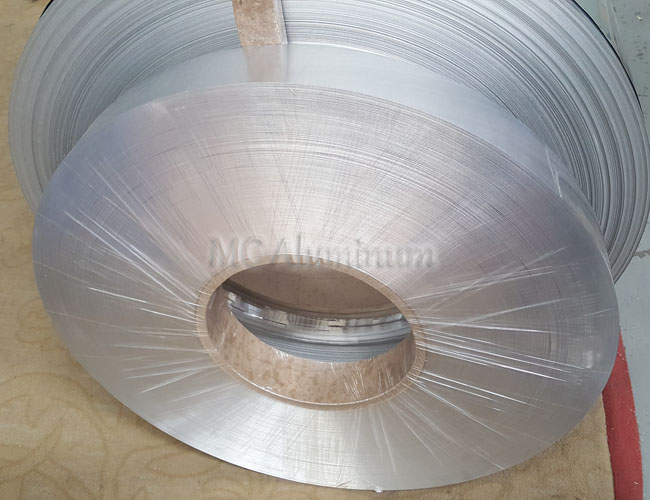
| Coil inner diameter | 150 mm, 300 mm, 500 mm, or customized | Matched to coating, slitting, and rewinding equipment |
| Coil outer diameter | Customized within handling limits | Defined according to line capacity and safe transportation |
| Edge condition | Trimmed edge, burr-controlled edge | Important for slitting quality and short-circuit risk management |
The values above are typical production options. Final technical specifications should be confirmed through drawings, samples, and quality agreements before mass production.
Surface Quality for Cathode Current Collectors
Surface condition is one of the most important quality factors for EV battery aluminum foil. A surface that is too smooth may reduce mechanical anchoring of the coating, while excessive roughness, rolling marks, oil residue, particles, or oxidation can lead to coating defects and unstable electrode performance.
Our manufacturing controls focus on surface cleanliness and uniformity throughout rolling, annealing, slitting, and packing. We manage rolling oil residues, surface defects, pinholes, edge damage, scratches, dents, and telescoping risk according to the applicable product specification.
For bare aluminum foil, the surface must be suitable for direct cathode slurry coating. We can provide material with controlled wettability and cleanliness for conventional water-based or solvent-based coating systems, depending on the customer's electrode formulation and process route.
For demanding electrode applications, carbon coated aluminum foil can provide improved contact behavior between the current collector and the active material layer. A conductive carbon coating may help reduce interface resistance, improve coating adhesion, and support stable electrode performance in selected battery designs.
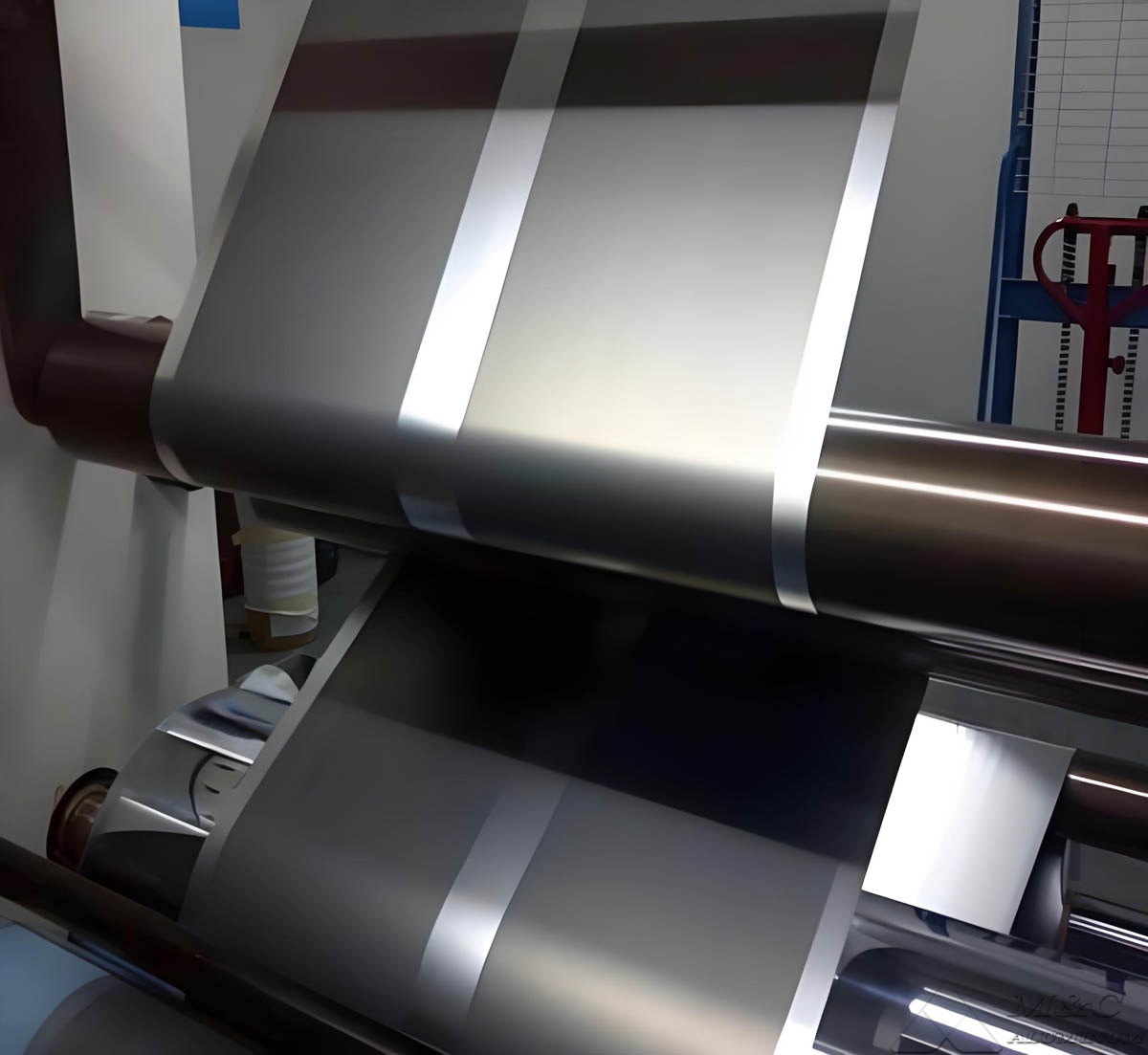
Carbon Coated Aluminum Foil for EV Batteries
Carbon coated aluminum foil is produced by applying a thin, uniform conductive carbon layer to one or both sides of the aluminum foil substrate. The coating is designed to support electrical contact and improve the bonding interface between the aluminum current collector and cathode coating.
As a carbon coated aluminum foil manufacturer, we evaluate substrate properties before coating, including thickness stability, surface cleanliness, flatness, and coil winding condition. The final coated product must maintain consistent coating weight, coating coverage, surface resistance, and adhesion across the full coil length.
Carbon coated battery foil is commonly considered for applications involving lithium iron phosphate cathodes and other systems where interface characteristics are important. However, the final selection should be based on the electrode formulation, coating method, drying profile, calendering pressure, electrolyte system, and cell performance targets.
Carbon Coating Control Items
| Control Item | Manufacturing Focus | Relevance to EV Battery Production |
|---|---|---|
| Coating side | One side or two sides | Matches the electrode design and coating process |
| Coating weight | Controlled to customer specification | Supports uniform electrical and bonding behavior |
| Coating thickness | Thin and consistent | Helps maintain electrode dimensional control |
| Surface resistance | Tested according to agreed method | Indicates conductive coating consistency |
| Adhesion | Evaluated after coating and processing | Reduces coating delamination risk |
| Pinholes and skips | Visual and inspection control | Avoids localized coating defects |
| Coil flatness | Controlled during rewinding | Supports stable feeding on coating lines |
Manufacturing Process and Quality Assurance
Our battery aluminum foil manufacturing process begins with qualified aluminum ingot and slab inputs. The material is processed through hot rolling when required, cold rolling, intermediate annealing, final rolling, slitting, inspection, and packaging. Each stage is controlled to achieve the required foil gauge, mechanical properties, and surface condition.
For lithium ion battery foil, final rolling accuracy is particularly important. Thickness variation can affect coating weight consistency and electrode balance. Our quality team uses appropriate measurement and inspection methods to verify key requirements, including thickness, width, edge quality, tensile properties, elongation, surface appearance, and coil geometry.
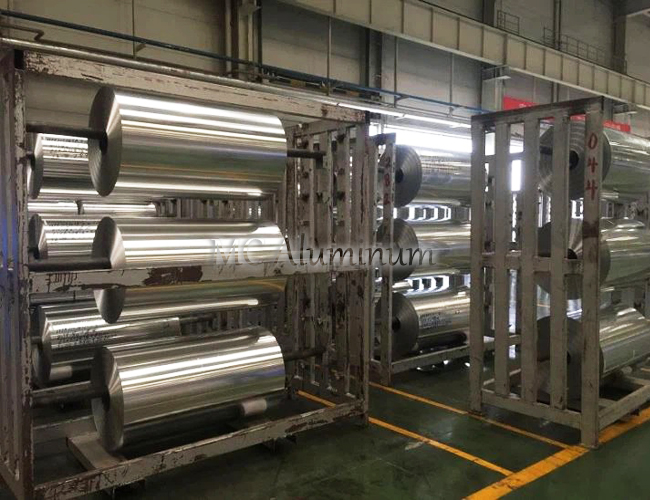
We also pay close attention to packaging because thin battery foil can be damaged by compression, impact, moisture, or poor coil support during international transportation. Coils are protected with suitable inner and outer wrapping, edge protection, labels, and pallets or wooden cases as agreed with the customer.
Typical Inspection Items
| Inspection Item | Purpose |
|---|---|
| Thickness and thickness profile | Confirms gauge consistency across width and coil length |
| Width and slit tolerance | Supports accurate electrode conversion and registration |
| Tensile strength and elongation | Verifies handling performance during processing |
| Surface appearance | Identifies scratches, stains, pits, wrinkles, and rolling defects |
| Cleanliness and residual oil | Supports stable slurry coating and adhesion |
| Edge burr and edge wave | Reduces slitting and winding-related defects |
| Pinholes | Evaluates foil integrity for thin-gauge material |
| Coil telescoping and flatness | Supports safe unwinding on customer equipment |
Selecting the Right Battery Foil Specification
EV manufacturers and battery cell producers should define battery aluminum foil requirements based on the complete electrode process rather than thickness alone. A suitable specification considers the cathode chemistry, target energy density, coating speed, drying temperature, calendering conditions, cell format, and automation level.
For example, thin aluminum foil may support reduced inactive material weight, but it requires careful control of tensile properties, pinholes, flatness, and handling strength. Wider foil coils can improve coating-line productivity, but they also require stable thickness profiles and robust packaging. Carbon coating may add functional value for certain electrode systems, but its coating parameters should be validated through pilot trials.
Before regular supply, we recommend confirming the following points:
Required alloy and temper.
Nominal thickness and allowable tolerance.
Coil width, inner diameter, outer diameter, and maximum coil weight.
Bare foil or carbon coated aluminum foil requirement.
Surface cleanliness, roughness, wettability, and coating adhesion criteria.
Mechanical property requirements.
Inspection standards, sampling rules, and documentation requirements.
Packaging, labeling, shipping, and storage conditions.
Partnering with a Battery Aluminum Foil Manufacturer
As a factory specializing in aluminum foil production, we provide direct technical communication from specification review through production, inspection, and shipment. Our objective is to supply EV battery aluminum foil that fits the actual requirements of electrode coating and battery cell manufacturing operations.
Whether you require bare aluminum cathode current collector foil, ultra-thin battery foil, slit coils, jumbo coils, or carbon coated aluminum foil, our manufacturing team can review your technical requirements and prepare a production proposal. By controlling material quality at the source, we help EV manufacturers establish a stable and traceable supply of aluminum foil for automotive battery applications.
Contact Us