
Cold Rolled Aluminum Strip for Transformer Applications
As a manufacturer of precision rolled aluminum products, we produce cold rolled aluminum strip for transformer applications with controlled chemistry, stable conductivity, and tight dimensional tolerances. In transformer winding, material consistency directly affects coil formation, insulation compatibility, temperature rise, and long-term operating reliability. For this reason, the production of transformer aluminium strip requires more than basic rolling capacity. It requires disciplined process control from melting and casting to cold rolling, slitting, annealing, inspection, and packing.
Cold rolled aluminum strip is widely used in dry-type transformers, oil-immersed transformers, reactors, and related electrical equipment. Compared with round wire conductors, aluminum strip for transformer winding offers advantages in space utilization, winding efficiency, and heat dissipation when properly designed. For manufacturers of electrical equipment, the key selection criteria usually include conductivity, edge quality, surface cleanliness, burr control, elongation, and uniform mechanical properties across the entire coil.
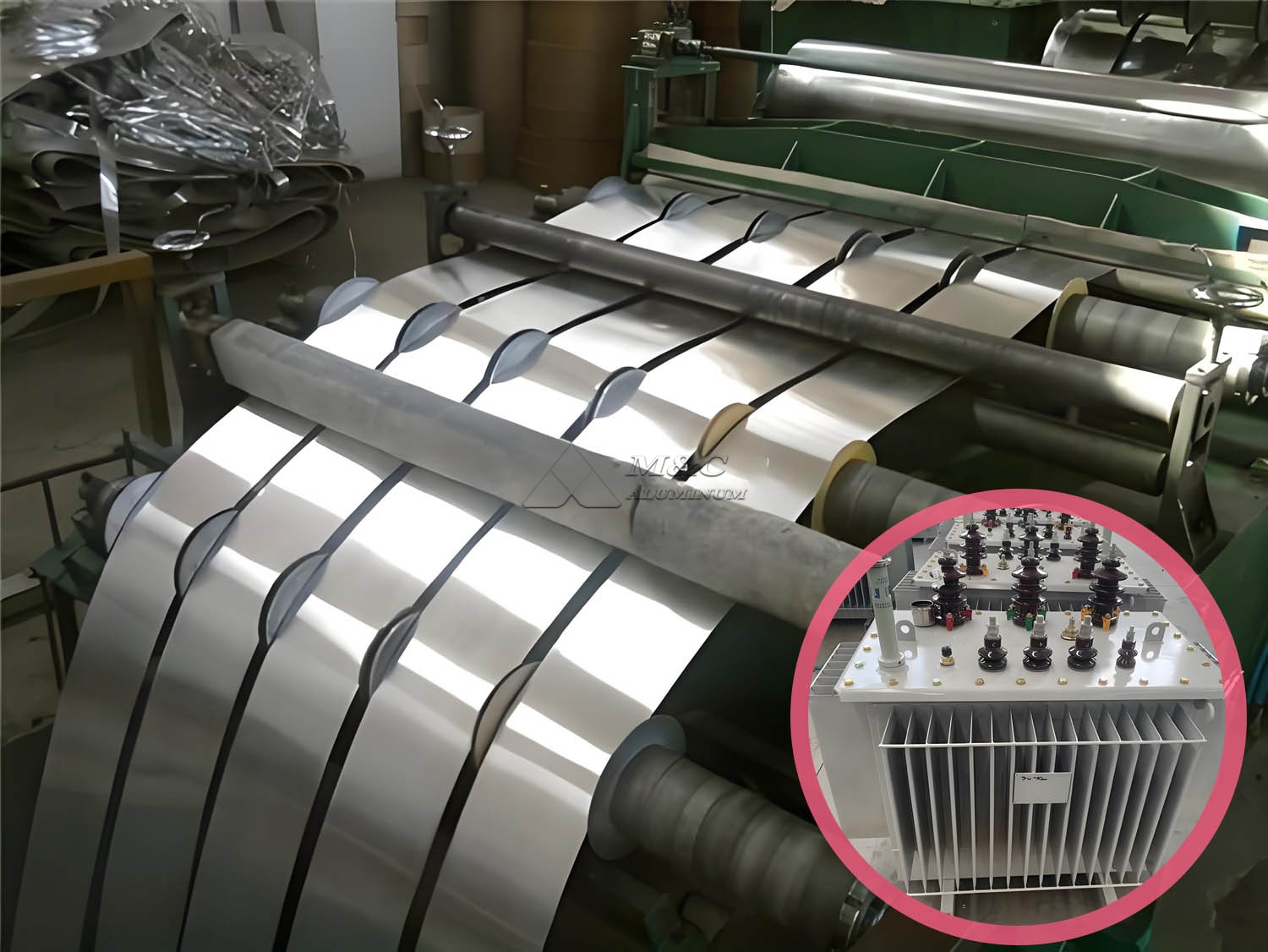
What Cold Rolled Aluminum Strip Means in Transformer Production
Cold rolled aluminum strip is produced by reducing the thickness of aluminum through rolling at room temperature after hot processing or continuous casting. In transformer applications, cold rolling is essential because it helps achieve precise thickness control, good flatness, and a clean surface suitable for insulation systems and automated winding.
Our production process for Transformer Aluminium Strip is designed to meet the practical requirements of electrical equipment manufacturers. We control not only nominal dimensions, but also the factors that determine processing stability at the customer site, including strip crown, slit edge condition, recoiling quality, and surface condition. These details are critical for high-speed winding lines and for reducing conductor damage during coil forming.
In most transformer designs, the strip must combine adequate electrical conductivity with formability. This balance is achieved through the correct alloy and temper selection, supported by a stable annealing process. For many transformer winding applications, electrical grade aluminum alloys are preferred because they provide favorable conductivity together with lower density and cost efficiency compared with copper.
Why Aluminum Strip Is Used for Transformer Windings
Transformer manufacturers use aluminum strip because it offers a practical combination of electrical and production benefits.
1. Good conductivity-to-weight ratio
Aluminum has lower density than copper, which helps reduce the total weight of transformer windings and can contribute to easier handling in fabrication and installation.
2. Efficient winding structure
Strip conductors allow compact winding geometry. This improves conductor arrangement and supports efficient use of winding space in both low-voltage and high-current transformer designs.
3. Stable processing performance
Cold rolled aluminum strip with controlled temper and elongation can be wound smoothly without excessive cracking, wrinkling, or shape instability.
4. Cost effectiveness in volume production
For many transformer categories, aluminum strip provides a competitive material solution while maintaining the performance required by international electrical equipment markets.
5. Good thermal behavior in engineered designs
When conductor dimensions and insulation systems are matched correctly, aluminum strip can support effective heat dissipation in transformer coils.
Alloys, Tempers, and Product Scope
As a factory, we manufacture Aluminum Strip in a range of alloys and tempers according to transformer design requirements. The most common grades for electrical applications include 1050, 1060, 1070, and 1350 series aluminum, depending on the conductivity target, mechanical properties, and customer standard.
The final temper is selected according to the winding method and forming requirements. Soft temper material is often preferred for transformer winding because it supports bending and forming without surface cracking. At the same time, the annealing process must be stable enough to ensure uniform softness throughout the full coil length.
Below is a typical technical scope for cold rolled aluminum strip used in transformer applications.
Typical Technical Parameters
| Parameter | Typical Range / Option |
|---|---|
| Product type | Cold rolled aluminum strip |
| Main applications | Transformer winding, reactor winding, electrical conductor strip |
| Common alloys | 1050, 1060, 1070, 1350 |
| Temper | O, soft annealed |
| Thickness | 0.20 mm - 3.00 mm |
| Width | 10 mm - 300 mm |
| Conductivity | According to alloy and customer specification |
| Tensile strength | According to alloy, temper, and applicable standard |
| Elongation | Suitable for transformer winding and forming |
| Edge condition | Slit edge, burr-controlled |
| Surface | Clean, smooth, oil-controlled, defect-free |
| Coil ID | As agreed with customer |
| Coil OD | As agreed with customer |
| Packing | Export seaworthy packing with moisture protection |
| Standards | Can be produced to customer drawing or applicable international standard |
The exact specification should be matched to the transformer design, winding equipment, and end-use market requirements. In production, narrow tolerances are often more important than broad nominal ranges. For example, thickness consistency and burr control can strongly influence insulation integrity and winding efficiency.
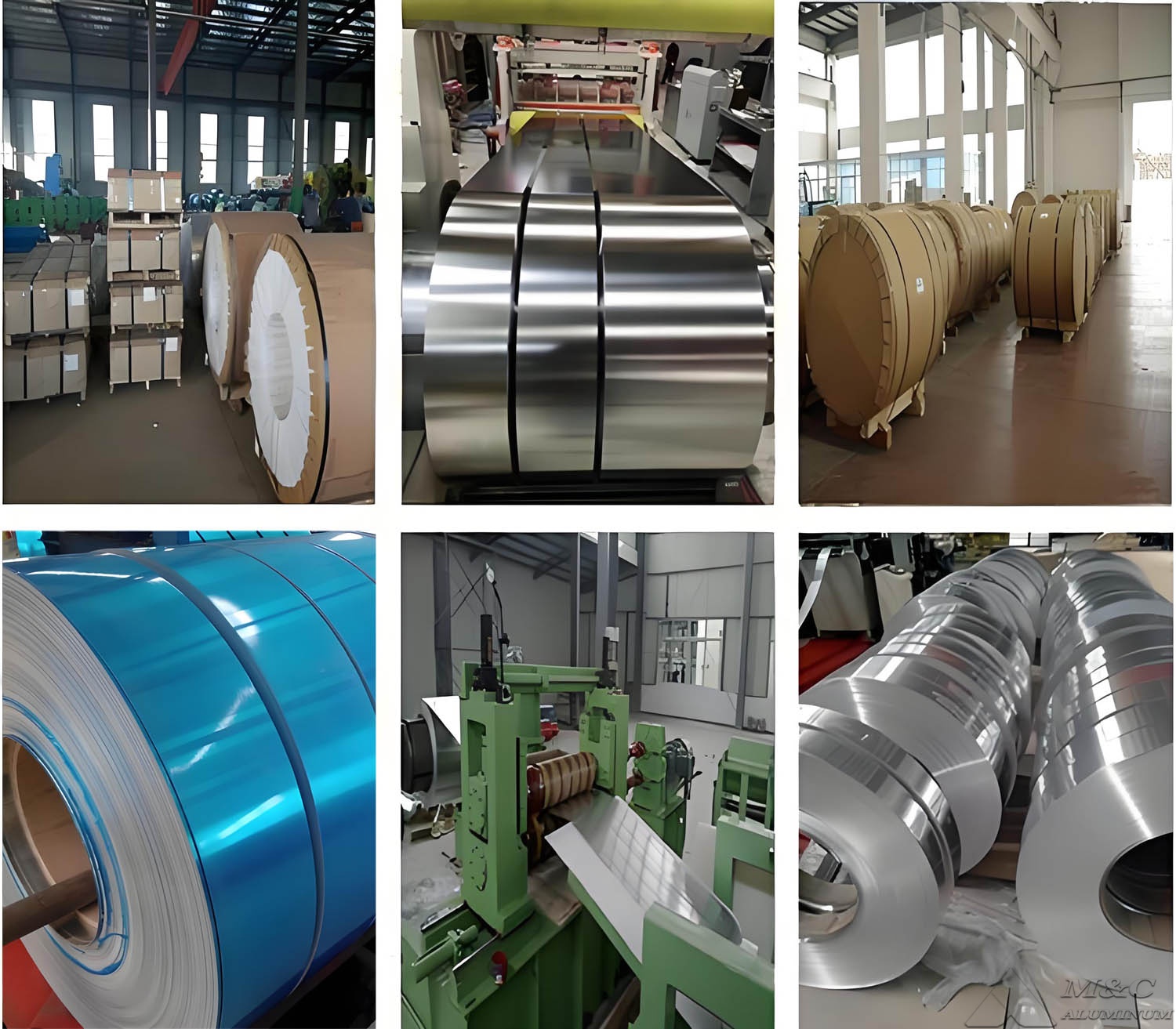
Key Manufacturing Controls for Transformer Aluminium Strip
From a manufacturing perspective, the quality of cold rolled aluminum strip for transformer use depends on several process stages.
Melt quality and raw material control
We begin with controlled raw material selection and melting practice. Stable chemical composition is the foundation for conductivity and downstream rolling behavior. Variations at this stage can lead to inconsistency in final mechanical and electrical performance.
Rolling accuracy
Cold rolling determines final thickness precision, flatness, and surface quality. In transformer strip, thickness deviation must be carefully managed because uneven material can affect winding compactness and electrical distribution in the final coil.
Annealing uniformity
Soft temper transformer strip requires uniform annealing across the full width and length of the coil. Inadequate annealing may cause hard spots, while excessive annealing can reduce process stability. We monitor annealing parameters to maintain the balance required for transformer winding.
Slitting and edge quality
Transformer manufacturers pay close attention to slit edge quality. Excessive burrs can damage insulation paper, enamel layers, or interlayer insulation during winding. For this reason, our slitting process emphasizes edge consistency, burr minimization, and stable recoiling.
Cleanliness and packaging
Surface cleanliness is essential for electrical applications. Contamination, residual debris, or uncontrolled oil can interfere with winding or insulation adhesion. Final packaging is designed to protect the strip from moisture, dust, and mechanical damage during export transport.
Performance Requirements in Practical Transformer Use
In our experience as a producer, customers for cold rolled aluminum strip used in transformers typically focus on the following practical requirements.
Dimensional consistency
High-volume winding lines require stable strip thickness and width from coil to coil. Good dimensional control reduces setup adjustments and helps maintain process repeatability.
Surface integrity
A smooth, defect-free surface reduces the risk of insulation abrasion. Surface defects such as scratches, roll marks, edge cracks, or embedded particles can affect downstream winding quality.
Winding behavior
The strip should unwind smoothly, maintain shape stability, and respond consistently during bending and layering. This depends on temper control, flatness, and recoiling quality.
Electrical reliability
The aluminum strip must meet the conductivity level expected for the selected alloy and application. Stable electrical properties are particularly important in transformers designed for continuous service.
Compatibility with customer processing
Different transformer plants use different winding speeds, insulation systems, and coil geometries. A manufacturer must therefore supply material matched to the actual process, not only to a generic specification.
Typical Applications
Cold rolled aluminum strip for transformer applications is commonly used in:
Low-voltage and high-current transformer windings
Dry-type transformers
Oil-immersed distribution transformers
Power transformer conductor systems
Reactors and inductive equipment
Electrical coils requiring soft, conductive strip material
In these applications, the material must support both electrical performance and efficient manufacturing. This is why transformer producers usually evaluate the strip not only in terms of laboratory data, but also in terms of winding yield, insulation protection, and finished coil consistency.
How We Support OEM and Export Requirements
As a manufacturing plant serving international industrial customers, we supply cold rolled aluminum strip according to confirmed technical specifications, drawings, and test requirements. Our production and inspection approach is based on practical export needs.
We can support:
Coil dimensions adapted to customer winding equipment
Alloy and temper selection for specific transformer designs
Tight tolerance rolling and slitting
Controlled edge and surface quality
Batch traceability
Export packing for sea and land transport
Mill test documentation according to order requirements
For OEM transformer manufacturers, consistency between batches is often as important as the absolute values of a single batch. Therefore, we place emphasis on process repeatability and documented inspection points throughout production.
Selection Considerations for Buyers
When specifying cold rolled aluminum strip for transformer applications, buyers should confirm several technical points before ordering:
Required alloy and target conductivity
Thickness and width tolerances
Temper and minimum elongation requirement
Maximum acceptable burr height
Surface cleanliness standard
Coil weight, inner diameter, and outer diameter
Insulation compatibility and winding process conditions
Required test certificates and inspection items
A precise specification helps avoid mismatch between laboratory values and actual winding performance. In many cases, the best material is not simply the highest purity grade, but the one optimized for the customer's transformer design and production line.
Conclusion
Cold rolled aluminum strip plays a critical role in transformer manufacturing, where conductivity, formability, dimensional precision, and edge quality must be controlled together. As a manufacturer, we produce transformer aluminium strip with a process focused on rolling accuracy, annealing uniformity, slit edge quality, and export-ready packaging. For transformer winding applications, stable product quality is essential not only for material compliance, but also for winding efficiency and long-term electrical reliability.
If your project requires cold rolled aluminum strip for transformer applications, the most effective approach is to define the winding process, electrical targets, and tolerance requirements at the beginning. This allows the material to be produced as an engineering product rather than as a general commodity strip.
Contact Us