
5052 Interlocking Armored Aluminum Strip for the Outer Layer of Power Cables
As an aluminum strip manufacturer serving cable, electrical, and industrial equipment customers, we produce 5052 interlocking armored aluminum strip for the outer protective layer of power cables. This material is designed for cable armoring lines that form an interlocked metallic sheath around medium voltage and low voltage power cables, control cables, mining cables, and special industrial cables.
The outer layer of a power cable must protect the insulation system from mechanical impact, compression, bending stress, abrasion, and environmental exposure. For this application, 5052 aluminum strip provides a practical balance of strength, corrosion resistance, formability, and low weight. When processed with controlled thickness, burr-free edges, consistent temper, and reliable coil winding, it can be formed into interlocking armor with stable productivity and good cable surface quality.
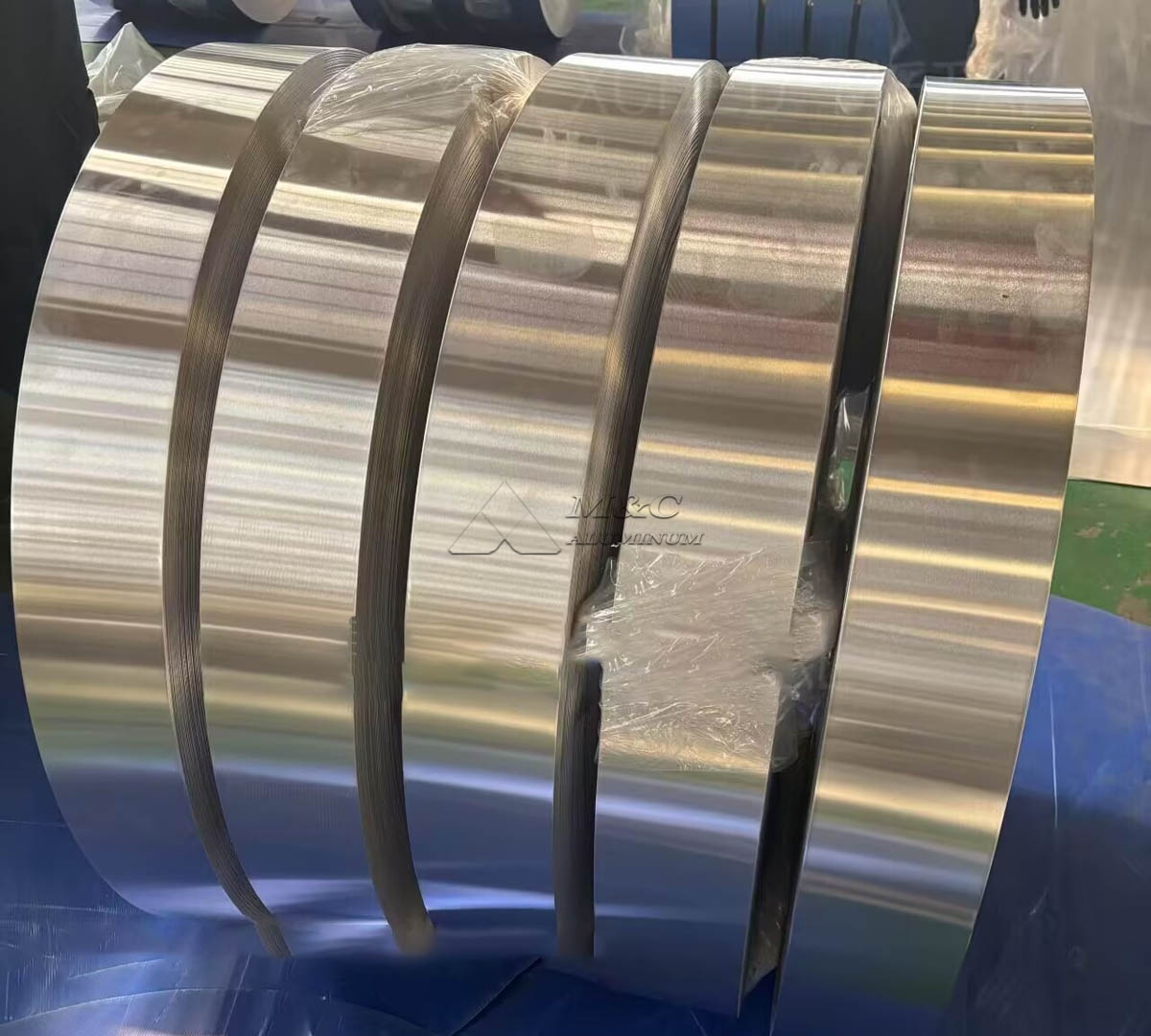
Manufacturing Position and Application Focus
We manufacture aluminum strip from selected aluminum coils through rolling, annealing, leveling, slitting, edge treatment, surface inspection, and packaging. For cable armoring applications, we focus not only on chemical composition and mechanical properties, but also on the processing details that directly influence interlocking performance on the customer side.
5052 interlocking armored aluminum strip is mainly used as the external metallic protection layer of power cables. During production, the strip is fed into a cable armoring machine, profiled, wrapped helically around the cable core, and mechanically interlocked. The finished armor layer improves resistance to external force while maintaining flexibility for installation and service.
Compared with steel armor, aluminum cable armoring strip offers lower density, better corrosion resistance in many environments, and easier handling during cable installation. Compared with softer pure aluminum alloys, 5052 aluminum strip has higher strength and better resistance to deformation, which is important for maintaining the geometry of the interlocked profile.
For customers requiring other aluminum strip products, our production system also supports general Aluminum Strip specifications for electrical, packaging, insulation, and industrial fabrication applications.
Why 5052 Alloy Is Suitable for Cable Armor
5052 is an Al-Mg series non-heat-treatable aluminum alloy. Its magnesium content improves strength and corrosion resistance while maintaining good bending and forming performance. These properties make it suitable for interlocking armor, where the strip must pass through forming rollers without cracking, edge tearing, or excessive springback.
The main advantages of 5052 armored aluminum strip include:
Good corrosion resistance in atmospheric and industrial environments
Higher strength than 1050, 1060, and 1100 aluminum strip
Stable forming performance for continuous interlocking armor production
Lower cable weight compared with steel armored structures
Good surface compatibility with cable sheathing and outer jacket processes
Reliable performance under bending and handling during cable installation
In cable manufacturing, material stability is often more important than maximum nominal strength. A strip with uneven temper, excessive camber, or rough edges can cause unstable forming, machine stoppage, poor interlock, and surface damage to the cable. For this reason, our production control emphasizes consistency across the full coil length.
Typical Technical Parameters
The following table shows common factory specifications for 5052 interlocking armored aluminum strip. Final values can be adjusted according to cable design, armoring machine type, interlock profile, and customer standard.
| Item | Typical Specification |
|---|---|
| Product name | 5052 interlocking armored aluminum strip |
| Application | Outer layer armor for power cables, control cables, and industrial cables |
| Alloy | 5052 |
| Temper | H22, H24, H32, H34, or customized temper |
| Thickness range | 0.20 mm to 1.20 mm, common values by cable design |
| Width range | 8 mm to 60 mm, customized by armoring equipment |
| Thickness tolerance | Typically +/-0.01 mm to +/-0.03 mm, subject to thickness and standard |
| Width tolerance | Typically +/-0.05 mm to +/-0.15 mm after precision slitting |
| Edge condition | Slit edge, deburred edge, round edge, or customer-specified edge treatment |
| Surface condition | Clean, smooth, oil-free or lightly oiled as required |
| Coil inner diameter | 300 mm, 400 mm, 500 mm, or customized |
| Coil outer diameter | According to line capacity and packing requirement |
| Coil weight | Customized for cable armoring line feeding efficiency |
| Standard reference | ASTM, EN, GB, or customer technical specification |
| Packaging | Eye-to-sky or eye-to-wall export packaging with moisture protection |
Chemical Composition of 5052 Aluminum Strip
Chemical composition control is the basis of stable mechanical properties. As a factory, we verify the alloy grade and maintain traceability from raw material to finished strip.
| Element | Typical Range, % |
|---|---|
| Si | <= 0.25 |
| Fe | <= 0.40 |
| Cu | <= 0.10 |
| Mn | <= 0.10 |
| Mg | 2.20 to 2.80 |
| Cr | 0.15 to 0.35 |
| Zn | <= 0.10 |
| Others, each | <= 0.05 |
| Others, total | <= 0.15 |
| Al | Balance |
The magnesium and chromium content of 5052 contributes to improved strength and corrosion resistance. For armored cable aluminum strip, composition must be supported by proper rolling and annealing practices to obtain the required temper and forming behavior.
Mechanical Properties and Forming Performance
Interlocking armor production requires a controlled combination of tensile strength, yield strength, and elongation. If the strip is too hard, cracks may appear at the formed edge or locking area. If it is too soft, the profile may deform under compression and the interlock may be less stable. Therefore, temper selection should match the cable diameter, armor profile, bending requirement, and installation environment.
| Temper | Tensile Strength, MPa | Yield Strength, MPa | Elongation, % | Application Note |
|---|---|---|---|---|
| H22 | 170 to 230 | 90 to 150 | >= 8 | Balanced forming and strength |
| H24 | 190 to 250 | 110 to 170 | >= 6 | Higher rigidity for profile stability |
| H32 | 170 to 230 | 100 to 160 | >= 8 | Stable bending performance |
| H34 | 210 to 260 | 130 to 190 | >= 5 | Higher strength for demanding armor layers |
Values are typical references and may vary according to thickness, standard, and agreed specification. Before mass production, we recommend confirming the strip temper through cable armoring trials, especially when the profile design, line speed, or cable diameter range is new.
Surface and Edge Quality Requirements
The surface and edge quality of aluminum strip directly affect cable appearance and machine operation. For 5052 armored aluminum strip, the surface should be free from defects that may damage the cable jacket or interrupt forming. Typical controlled defects include heavy scratches, oil stains, black marks, oxidation spots, dents, and roll marks beyond the agreed limit.
Edge condition is especially important. Burrs or sharp edges may cut cable sheath material, create unstable interlocks, or increase wear on forming rollers. We can supply slit edges for standard applications and deburred or rounded edges for stricter cable production requirements. Edge treatment is selected according to cable type, armoring speed, and final cable protection requirement.
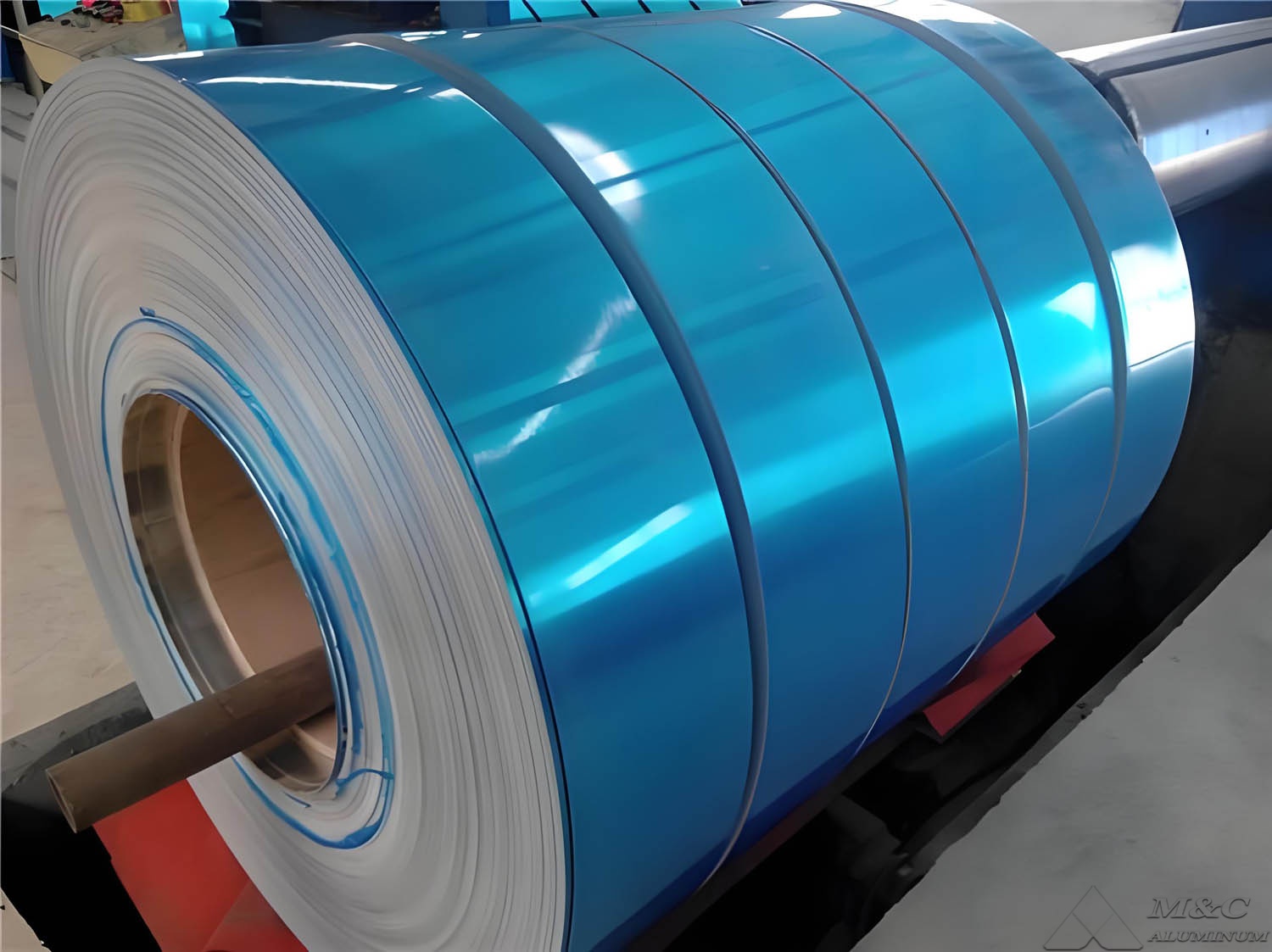
Production Process in Our Factory
Our production flow for 5052 interlocking armored aluminum strip is organized to maintain dimensional accuracy and coil stability.
First, aluminum coils are selected according to alloy, thickness, and surface quality requirements. The coils are then rolled to the required gauge and processed through controlled annealing or stabilization to achieve the specified temper. After leveling, the material is slit to the required width using precision slitting equipment. Edge burr height, width deviation, and camber are monitored during this stage.
After slitting, the strip is rewound under controlled tension. Proper winding tension prevents telescoping, loose coils, and edge damage during transportation. Each coil is inspected for surface condition, dimensions, and labeling accuracy before packaging. For export orders, we use moisture-resistant materials, protective pads, and strong wooden packaging suitable for sea transportation.
This process supports stable supply for cable manufacturers using continuous armoring lines, where coil consistency is essential to reduce downtime and material loss.
Dimensional Control for Interlocking Cable Armor
For cable armoring, small dimensional variations can affect the profile height, overlap, and locking consistency. Therefore, thickness tolerance, width tolerance, camber, and coil flatness must be controlled together.
A strip that is too narrow may reduce interlock engagement, while a strip that is too wide may create excessive forming resistance. Uneven thickness can cause profile fluctuation and affect the uniformity of the armor layer. Excessive camber may result in poor feeding alignment and unstable wrapping around the cable core.
As a manufacturer, we discuss these points with customers before production. Required data normally includes nominal strip thickness, strip width, temper, coil ID, maximum coil weight, cable diameter range, armoring machine type, and packaging preference. With complete technical information, we can recommend a more suitable 5052 aluminum strip specification for long-term cable production.
Comparison With Other Aluminum Strip Grades
Different aluminum alloys may be used in cable and electrical applications. Pure aluminum grades such as 1050 and 1060 provide excellent electrical conductivity and formability, while 3003 offers moderate strength and good workability. For interlocking armor, 5052 is often selected when higher mechanical strength and corrosion resistance are required.
For electrical winding applications rather than cable armor, customers may also use Transformer Aluminium Strip, where conductivity, edge quality, and insulation compatibility are the main concerns. In contrast, 5052 interlocking armored aluminum strip is primarily evaluated by its mechanical protection performance, forming stability, and resistance to corrosion.
Quality Inspection and Traceability
We apply inspection at incoming material, in-process production, and finished coil stages. Standard inspection items include alloy verification, thickness, width, surface quality, edge condition, mechanical properties, coil winding quality, and packaging condition. Test reports can be supplied according to the order requirement.
Traceability is maintained through coil number, batch number, alloy grade, temper, production date, and inspection records. This helps cable manufacturers manage quality documentation and investigate any processing issue quickly. For long-term supply projects, we can also maintain fixed process parameters to improve consistency from batch to batch.
Packaging and Export Handling
5052 armored aluminum strip must arrive at the cable factory without deformation, moisture damage, or edge impact. We package coils with protective film, moisture-proof paper, edge guards, inner and outer protection, and wooden cases or pallets. Eye-to-wall and eye-to-sky packaging are both available depending on coil size and unloading method.
Labels normally include product name, alloy, temper, size, coil number, net weight, gross weight, and order reference. Clear identification helps warehouse staff and production operators select the correct material for each cable order.
Ordering Information
To prepare a precise quotation and production plan, please provide the following information:
Alloy and temper, for example 5052 H24
Strip thickness and width
Required tolerance for thickness and width
Edge condition, such as slit, deburred, or rounded
Coil inner diameter, outer diameter, and preferred coil weight
Surface requirement and oiling requirement
Applicable standard or technical drawing
Annual demand or trial order quantity
Destination port and packaging preference
With these details, our engineering and production teams can confirm whether the specification is suitable for your cable armoring equipment and outer layer design.
Conclusion
5052 interlocking armored aluminum strip is a reliable material for the outer layer of power cables when strength, corrosion resistance, formability, and weight reduction are required. Its performance depends not only on the alloy itself, but also on rolling control, temper accuracy, slitting precision, edge quality, and coil packaging.
As a factory manufacturer, we produce 5052 armored aluminum strip according to cable industry requirements and customer technical specifications. By controlling material properties and processing details throughout production, we support stable interlocking armor forming, consistent cable protection, and efficient operation on cable manufacturing lines.
Contact Us